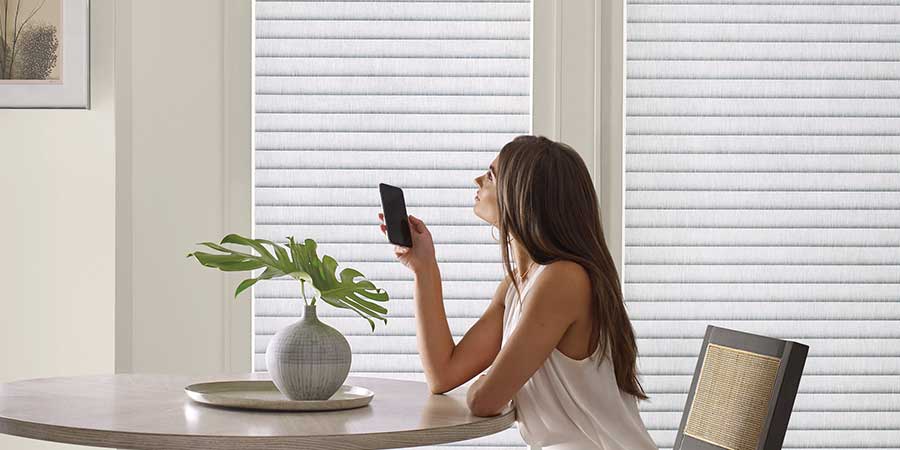
Motorized window treatments can make everyday light control, privacy and comfort easier—but choosing the right automation depends on your windows, your home and how you want to use them. Should you automate one difficult window or an entire room? Choose rechargeable power or hardwiring? Use a remote, app, voice control or automated schedules?
This guide walks through the decisions that can help you choose the right approach. If you’re ready to explore the technology itself, see our motorized shades and smart blinds for PowerView® control options, compatible window treatments and professional installation.
Understand Your Motorization Options
Before choosing a system, it helps to understand the different levels of motorized control. Motorized window treatments use a motor to adjust the shade, blind, shutter or drapery. Some systems operate directly at the window, such as SoftTouch® wand motorization.
Remote-controlled shades let you operate one or multiple window treatments without manually adjusting them.
Smart shades add connected controls such as an app, schedules, scenes, voice control and compatible smart-home integrations.
You don’t necessarily need the highest level of automation at every window. The right choice depends on where the window treatment is located, how often you adjust it and how you want it to function throughout the day.
Which Window Treatments Should You Motorize?
Motorization is available with many Hunter Douglas window treatments, but the best choice starts with selecting the right treatment for the window—not automation alone.
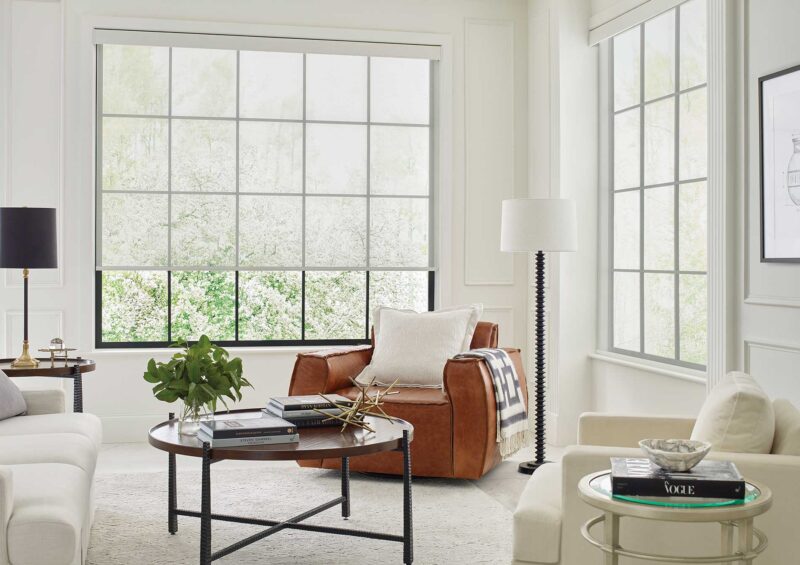
Shades are a popular choice for motorization because automation can raise, lower or adjust the treatment for changing light and privacy throughout the day.
Blinds can use motorization to adjust the slats for light and privacy, with capabilities varying by collection.
Shutters can offer motorized louver tilt in compatible collections, making them useful where frequent adjustment is desirable.
Drapery can be motorized to open and close across large windows and doors, combining soft fabric styling with convenient operation.
Your Skyline designer can help you choose the window treatment first, then determine which operating system is available for that product and application.
Where Will Motorization Make the Biggest Difference?
You don’t have to automate every window to enjoy the benefits. Start by thinking about the windows that are difficult to reach, adjusted frequently or responsible for changing light and privacy throughout the day.
Hard-to-Reach Windows
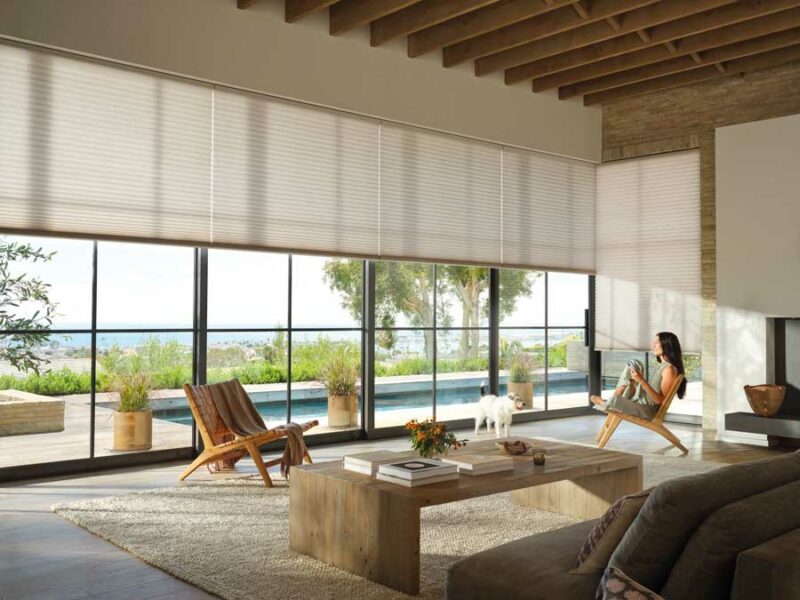
Tall, second-story and difficult-to-access windows are among the strongest candidates for motorization. Instead of leaving these shades in one position because they’re inconvenient to reach, you can adjust them whenever the light changes.
Windows You Adjust Frequently
Bedrooms, living rooms and street-facing windows may be opened and closed several times throughout the day. Motorization makes those repeated adjustments easier.
Rooms with Glare or Direct Sun
If afternoon sunlight creates glare or unwanted heat, automated schedules can adjust shades at predictable times instead of waiting for someone to close them manually.
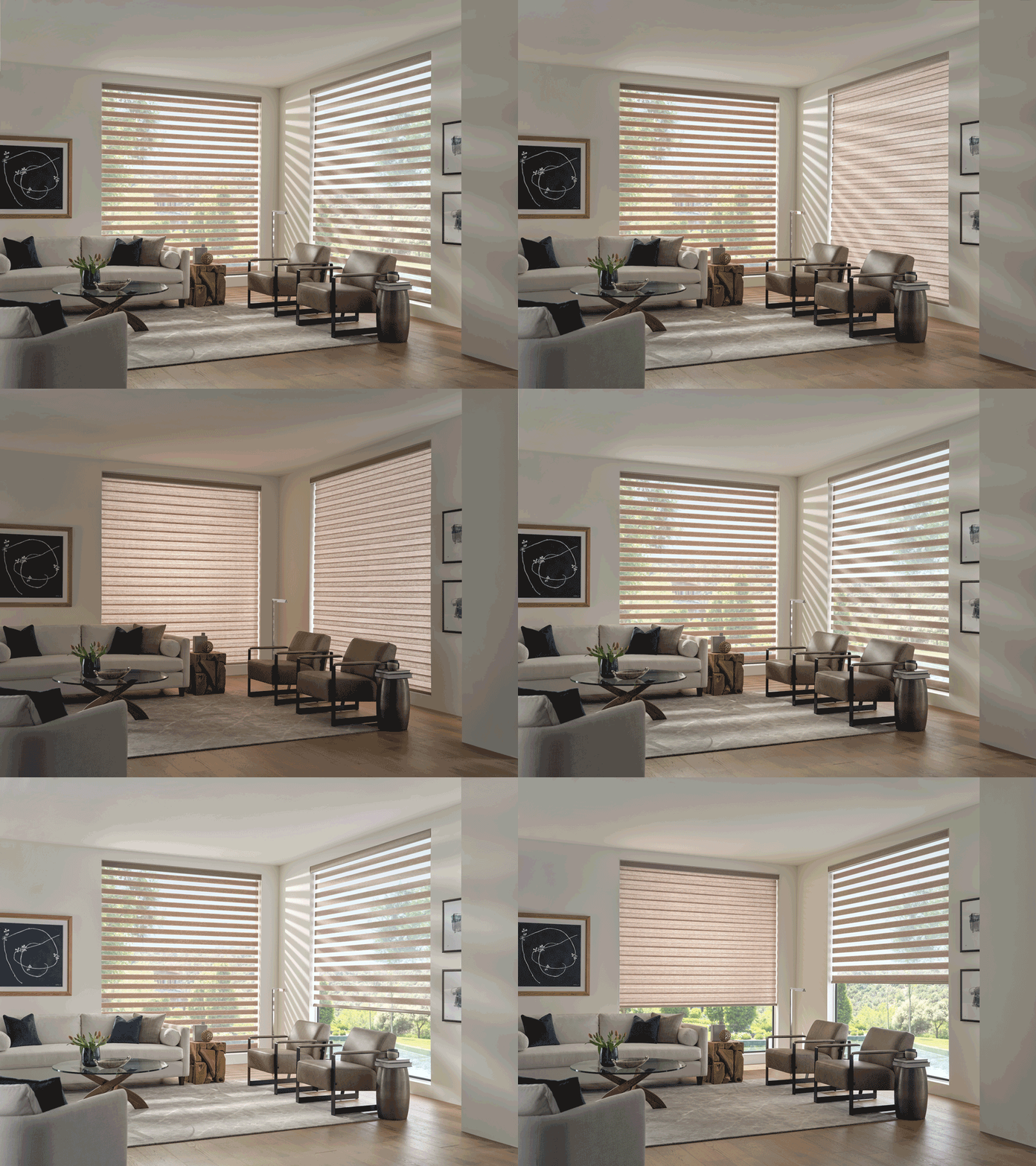
Large Groups of Windows
In rooms with several windows, motorization allows multiple shades to adjust together instead of requiring you to operate each treatment individually.
Windows Where Privacy Changes Throughout the Day
Street-facing windows, bedrooms and other privacy-sensitive spaces can benefit from scheduled adjustments, particularly as evening approaches.
Real-Life Moments Automation Solves
Do any of these scenarios sound familiar?
- You adjust and readjust the shades, just to step back and realize they still aren’t even. With motorized shades, multiple window treatments can be adjusted together for a more consistent look.
- Those living room windows that require a ladder to reach? With automation, you’re one tap away from adjusting those hard-to-reach window treatments.
- You lean—uncomfortably—over the furniture, trying to adjust the roller shades. With automated shades, adjustments can happen with a remote, app or compatible voice control, without reaching around obstacles.
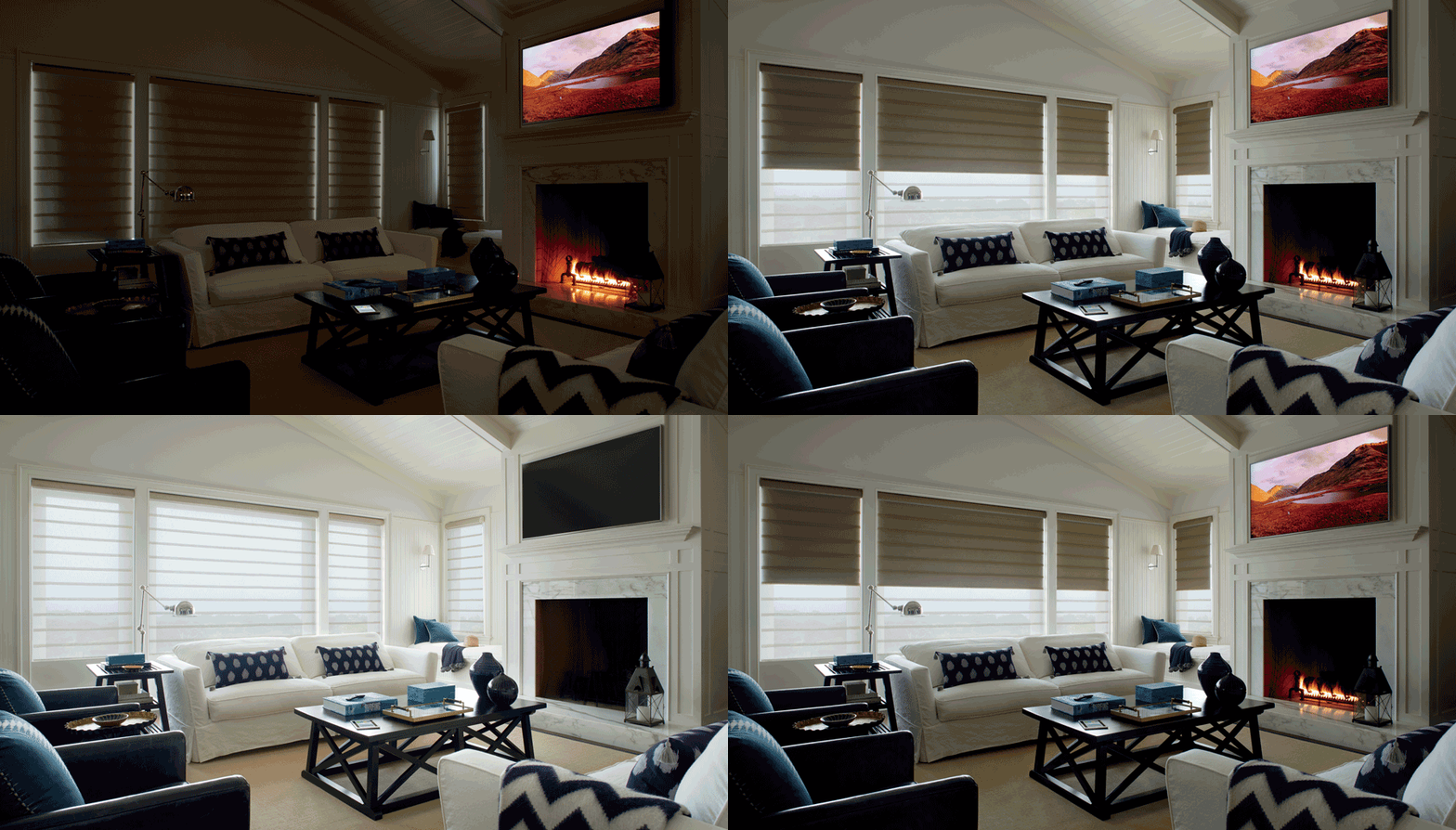
- After a long day, you finally sit down to watch TV, only to realize that the shades are still open and the glare is unbearable. Motorized window treatments let you adjust the light without getting back up.
- Your bedroom is dark—if you have the right window treatments. Bedroom smart shades can operate on a schedule to welcome morning light when you want it.
Decisions to Make Before Choosing Motorized Shades
Once you’ve identified the windows where motorization would be most useful, the next step is deciding how you want those window treatments to be powered and controlled.
Battery, Rechargeable, Solar or Hardwired?
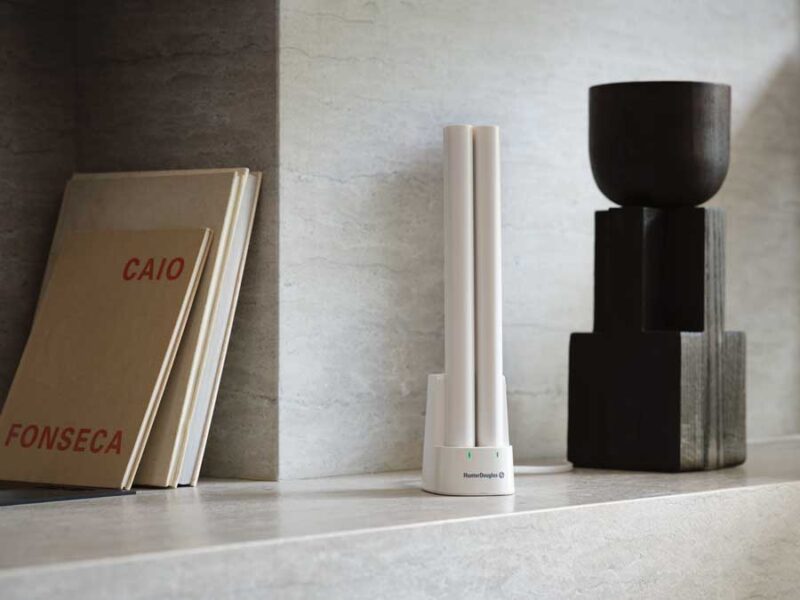
Power is one of the first decisions to make. Battery-powered systems can simplify installation in existing homes, while rechargeable power reduces the need for disposable batteries. The Hunter Douglas Solar Charger can eliminate manual recharging in most compatible windows, while hardwired power can be especially appealing during construction or remodeling.
For a closer look at these choices, learn about the Rechargeable Battery Wand and motorized shade power options.
Individual Control or Whole-Home Automation?
Think about whether you want help operating one or two individual shades or want multiple window treatments working together throughout your home.
Individual motorization can be ideal when you simply want easier operation at a few specific windows. SoftTouch® wand motorization, for example, operates right at the window with a gentle nudge of the wand to activate the shade.
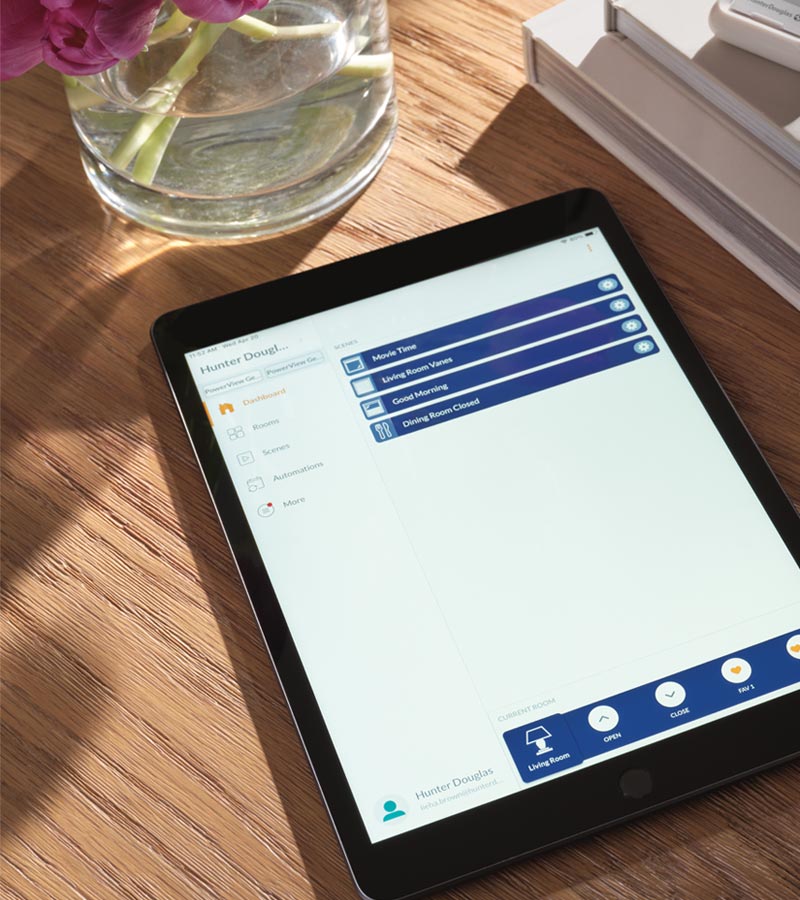
PowerView® Automation offers more ways to coordinate multiple shades. Window treatments can be controlled with a remote or app and organized into scenes and schedules, making it easier to manage an entire room or multiple areas of the home.
For a whole-home project, consider which shades you want to operate together and which routines happen every day. Morning light, afternoon glare and evening privacy are all opportunities where coordinated automation can be especially useful.
Remote, App, Voice or Schedules?
How do you actually want to operate your shades? You may prefer one control method or use several depending on the situation.
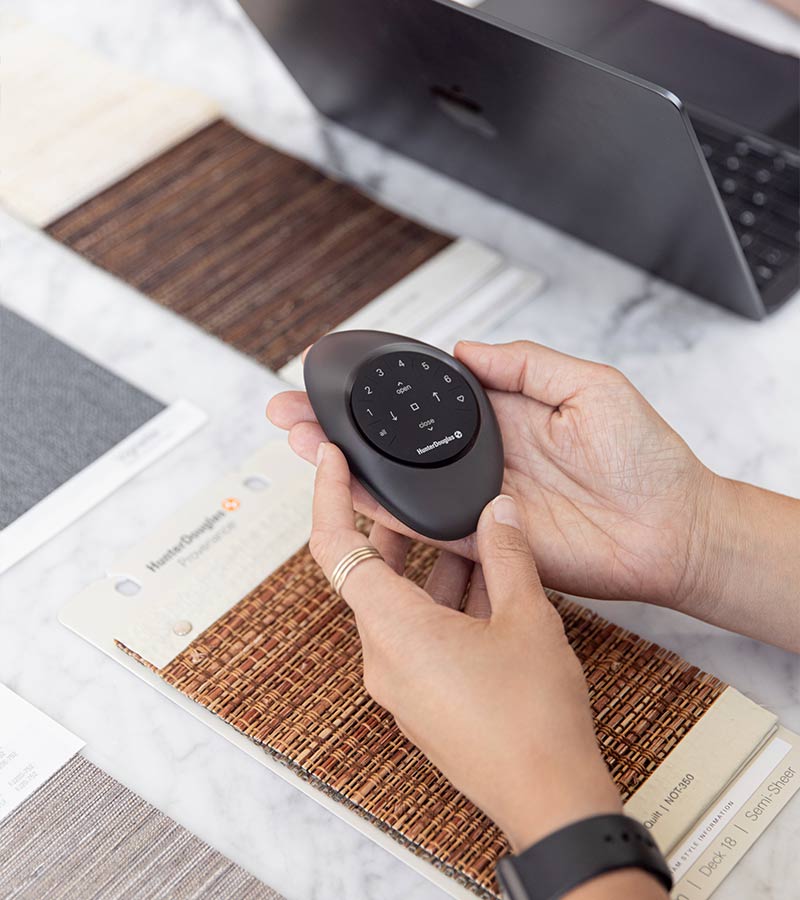
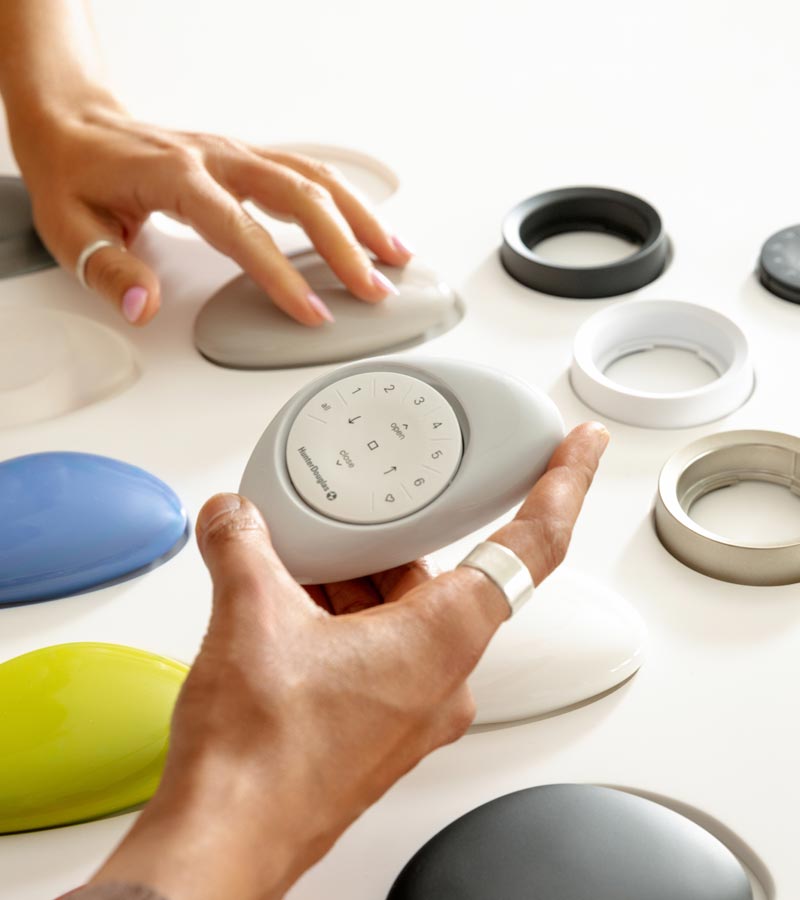
- Remote: A convenient choice for quick adjustments without opening an app. The Pebble® Remote can be kept nearby for easy access.
- App: Smart-device control makes it easy to adjust shades and manage settings from your phone or tablet.
- Voice Control: Compatible smart-home integrations can provide hands-free control when that’s useful in your daily routine.
- Schedules and Scenes: Instead of making the same adjustments every day, you can coordinate shades around routines such as morning light, afternoon sun or evening privacy.
You don’t have to choose only one. Consider which controls will feel most natural for everyone who uses the shades in your home.
How Important Is Motor Noise?
There have been significant advancements in window shade automation over the last couple of decades, including the sound of motors in operation. Many companies will boast of “whisper quiet” operation, but don’t let that description be the deciding factor.
Think about where the shades will be installed and when they’ll typically operate. Motor sound may matter more in a bedroom or quiet home office than in a busy living space. This is one reason our clients appreciate visiting a showroom, where you can experience firsthand how motorized shades sound and operate in real life.
How Much Do Motorized Shades Cost?
This is a frequent smart blinds question—as it should be. There isn’t one standard price for motorized shades because motorization is part of a custom window treatment project. Cost depends on factors like:
- The motorization and control system you choose
- The number of window treatments being motorized
- The size and configuration of the windows
- The type of window covering, fabric and materials selected
- Additional features or specialty configurations
- The power source and installation requirements
If you’re balancing features with a project budget, a designer can help you identify the windows where automation will provide the most value. You may decide to automate an entire room, focus on the hardest-to-reach windows or plan a whole-home system in phases.
Which Rooms Should You Motorize First?
When upgrading your home with motorized window treatments, go room by room and consider where convenient control, schedules or coordinated adjustments will make the biggest difference.
- The Entryway: Privacy and light can change throughout the day, making instant or scheduled adjustments particularly useful.
- The Kitchen: A busy room with ever-changing light, kitchen window coverings can be difficult to stop and adjust when your hands are full. Motorization makes hands-free or remote adjustments more convenient.
- The Living Room: Adjust shades to manage glare and direct sun during the day, then close them for privacy in the evening.
- The Home Office: Changing daylight can create glare on screens. Motorized shades make it easier to adjust home office window treatments throughout the workday.
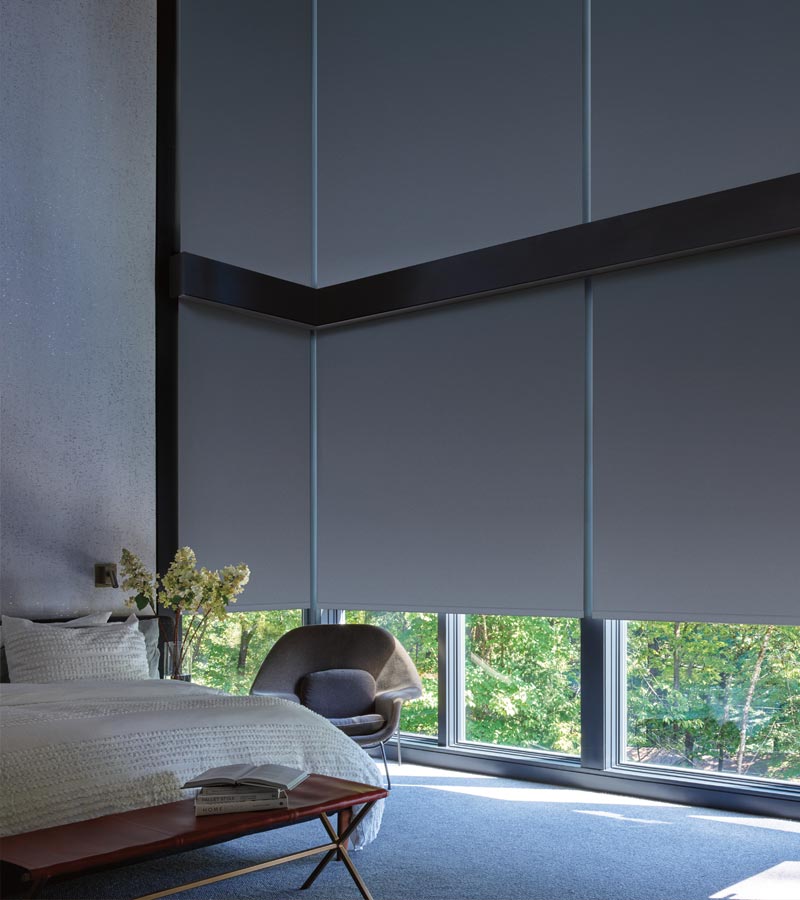
- The Bedrooms: Schedules can coordinate room-darkening and privacy at night with natural light in the morning.
- Two-Story & Large Window Spaces: Tall and expansive windows are some of the strongest candidates for motorization because manual operation can be difficult or impractical. Explore more solutions for large and floor-to-ceiling windows.
What Should You Discuss With Your Window Treatment Designer?
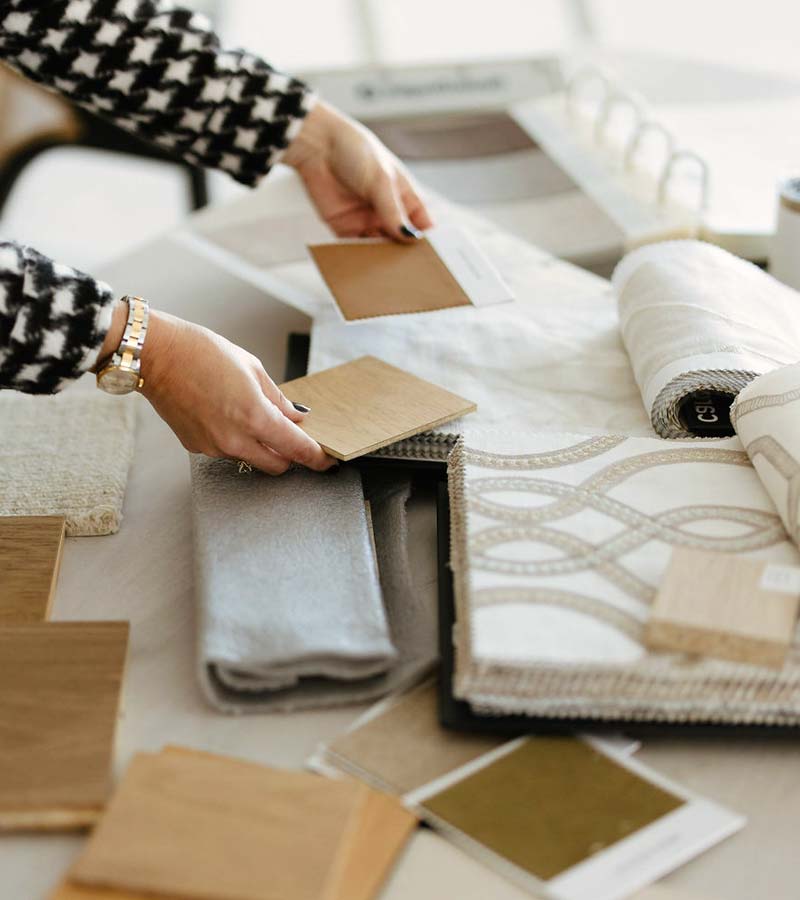
A design consultation is an opportunity to look beyond the individual shade and think about how motorization will work in your home. You’ll work one-on-one with a window covering specialist to choose the window treatments, fabrics, operating systems and power options that fit your project.
Before making your selections, consider questions like:
- Which windows would benefit most from motorization?
- Do you want to automate individual windows, an entire room or multiple rooms?
- Would you prefer a remote, app, voice control, schedules—or a combination?
- Does battery, rechargeable, solar-assisted or hardwired power make the most sense?
- Are you building a new home or remodeling?
- Do you have existing smart-home technology you’d like your shades to work with?
- Are any windows especially large, tall or hard to reach?
- How important is motor sound in the room?
- How accessible will the batteries or charging system be?
You can also visit a Skyline showroom to see motorized window treatments operate in person before deciding which features make sense for your home.
Professional Installation & Setup
Installation is a key factor in how your motorized window treatments will perform. Depending on the project, professional installation can include shade placement, power connections, calibration and setup—especially for large or hard-to-reach windows.
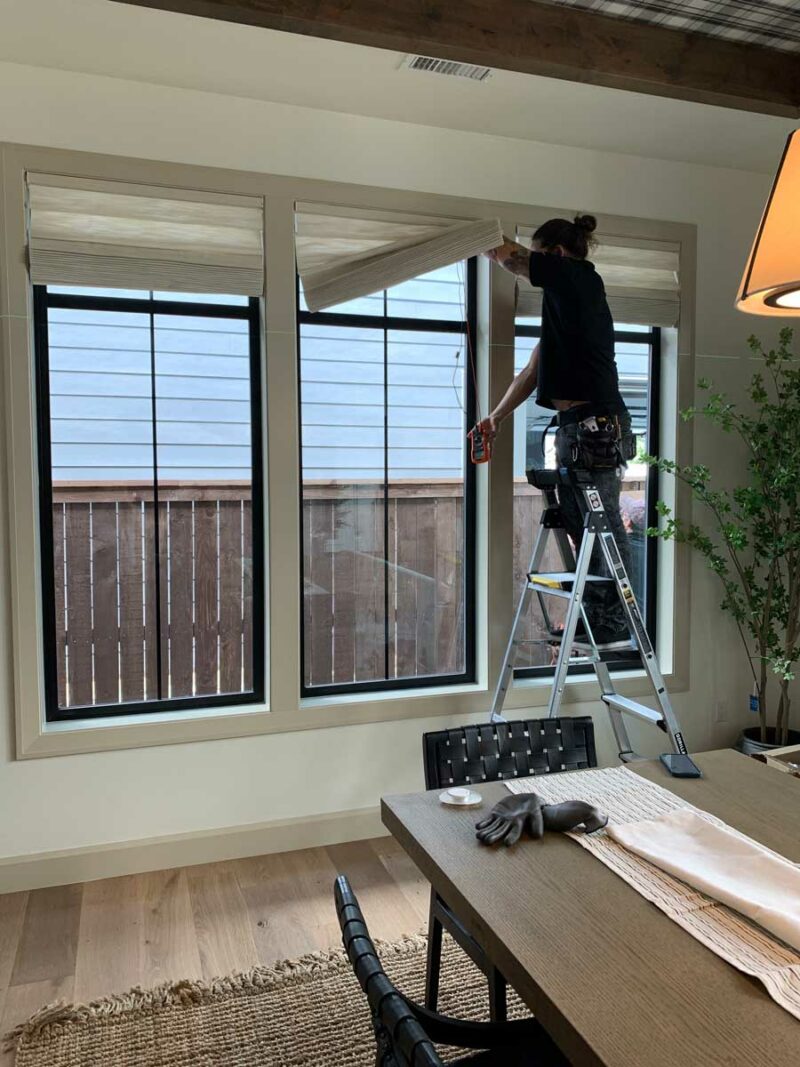
Our team will professionally install your window treatments and help you get comfortable with the controls and features you’ve selected.
Why Choose Skyline Window Coverings?
Motorized window treatments are an investment in how your home functions every day. As an authorized Hunter Douglas dealer, Skyline can help you compare window treatments, power sources and operating systems rather than choosing automation in isolation. Our designers help plan the system around your windows and lifestyle, while our professionally trained installers handle installation and setup so you’re ready to use your new motorized shades.
Ready to Choose Your Motorized Shades?
The right automation doesn’t have to mean motorizing every window or choosing every available feature. It’s about finding the places where easier control will make the biggest difference in your home. At Skyline Window Coverings, we’ll help you determine the right window treatments, power source and level of automation for your project. Get in touch for your free in-home design consultation.