
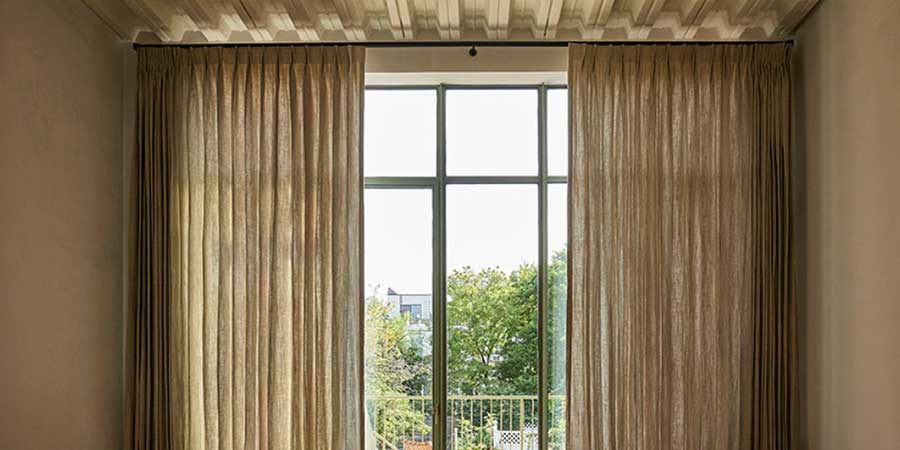
Draperies are known to create a beautiful look at the window. As you learn more about these custom window treatments, you’ll find that there are a number of details that allow you to truly create your own personal statement. Pinch pleat drapery offers a timeless—and very contemporary—look, capable of transcending a range of interior design statements.
What Is Pinch Pleat Drapery?
Pinch pleat describes a specific header style of custom drapery, finishing the top of the window treatments with tailored folds, often using structured elements for consistent dimension. The words “pinch pleat” originate from the sewing style that creates the finished look. This involves pinching together fabrics and stitching them, or tacking them in place, in a specific fold style. There are a variety of pinch pleat formations. We will showcase the most common headers you’ll see, along with other selections, highlighted and defined so you can choose the one that appeals to you.
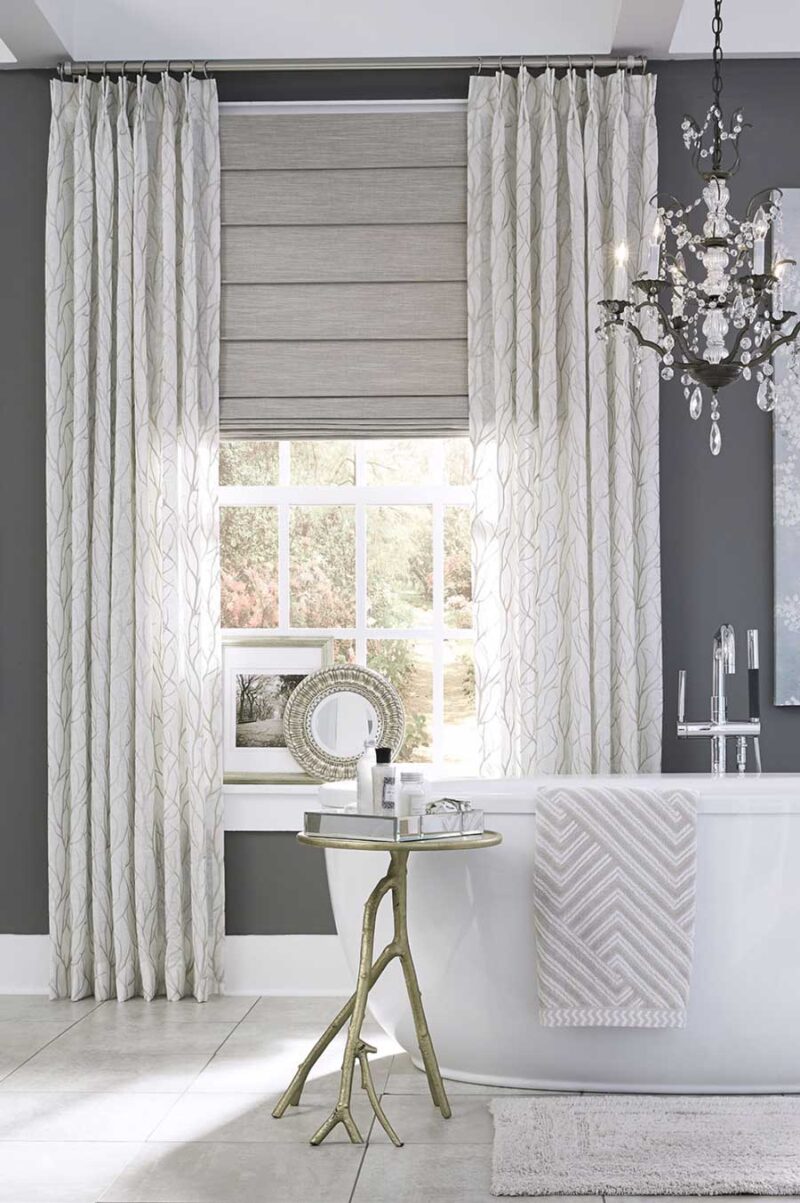
Double Pleat VS Triple Pleat: What’s the Difference?
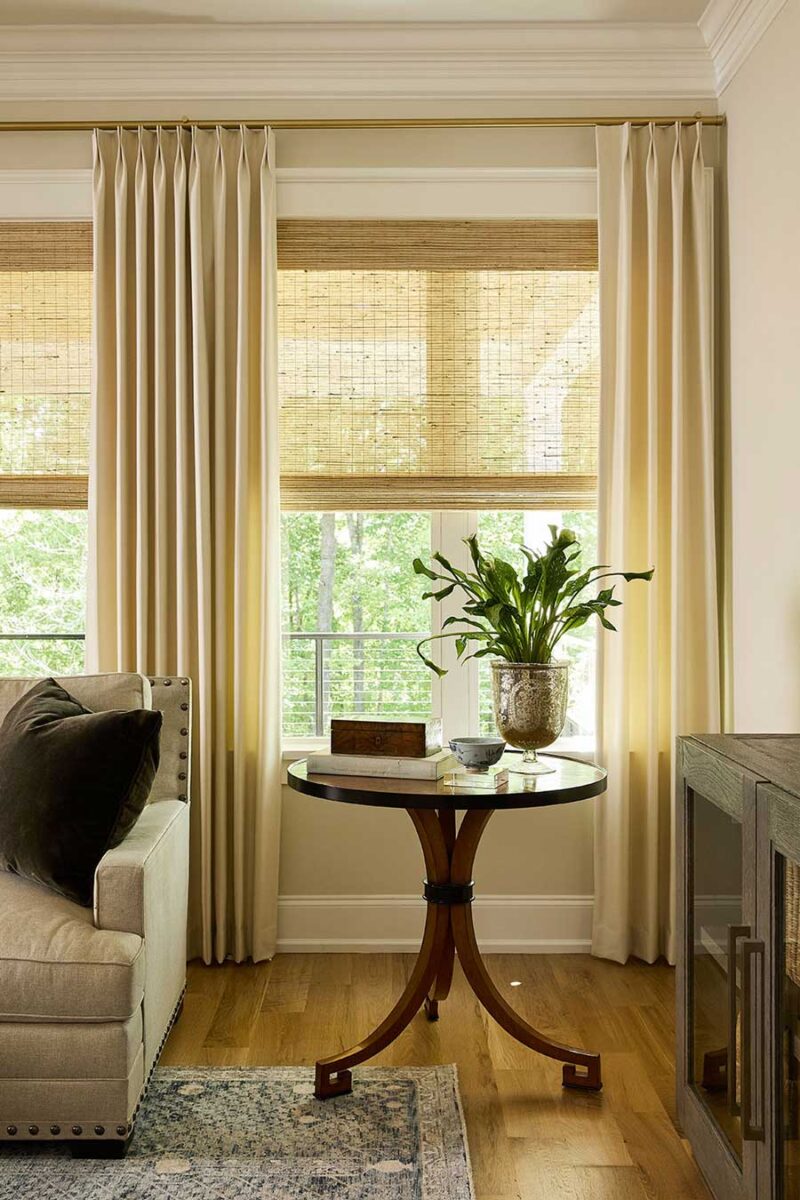
The most common folds you will see come with the double and triple pleat curtain style. These pinch pleat drapery folds are also known well in the design community as french pleats. Fabric is gathered and tacked together approximately 3–4 inches down from the top edge of the drapery. The difference between double pleat and triple pleat is the amount of folds—and this can have an impact on the overall style, function and cost.
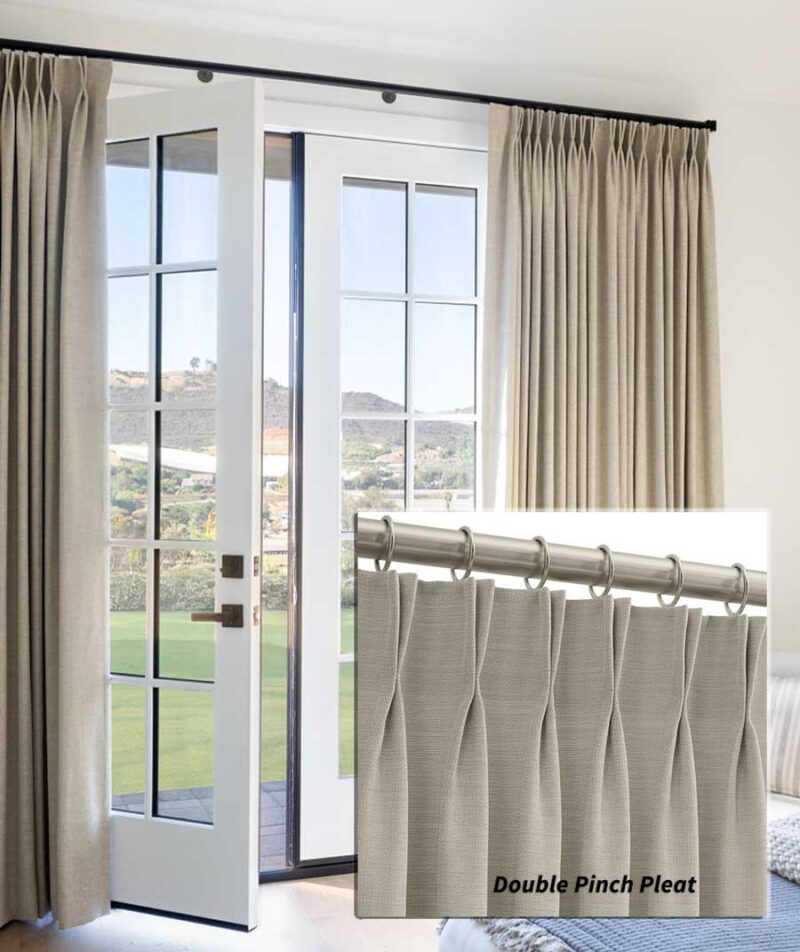
Double Pleat
The double pinch pleat style involves two structured folds that form a “V” shape above and below the tack point. This is also known as a “two finger pleat.”
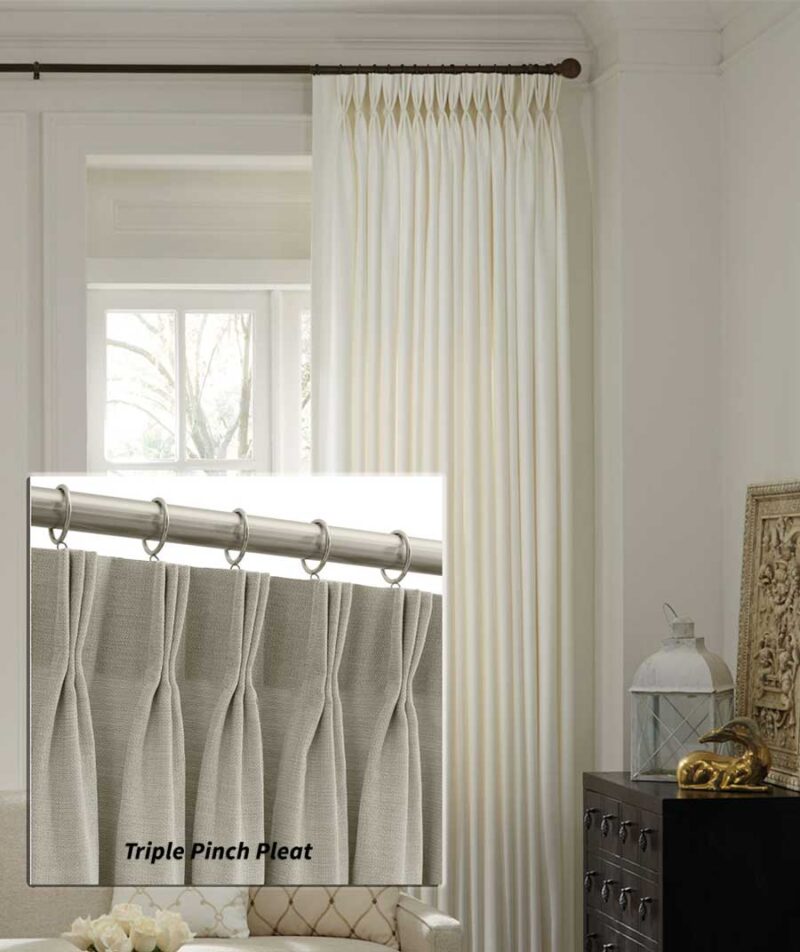
Triple Pleat
The triple pleat adds one more pleat of fabric, fanning out from the top and bottom of the tack point to form a “W” shape. This is also known as a “three finger pleat.”
How Should You Choose?
When deciding between header styles, you’ll always want to rely on which look captures your eye the best—window treatments should feature the style you want in your home. Your window covering designer can help you decide which look fits you—with additional advice about your selections. Both header styles are among the most popular, but double pinch pleat is thought to be less formal than triple pleat drapery, often featuring lightweight fabrics. Triple pleat drapery can be more expensive, due to the large amount of fabric used and because it’s commonly seen with heavier weighted fabrics.
What Is Euro Pleat Drapery?
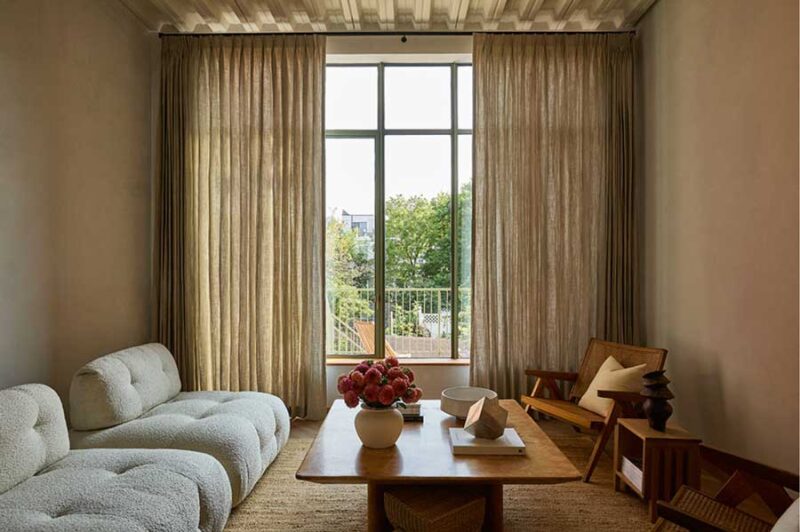
A variety of pinch pleat drapery, the euro pleat has gained popularity due to its ability to feel more relaxed, yet still tailored. This look allows the drapery to cross style statements with ease. The concept of the euro pleat is gathering the fabrics near the very top of the drapery and tacking the fabric folds there—or a half inch down. Then, the fabric folds are relaxed, flowing down the window.
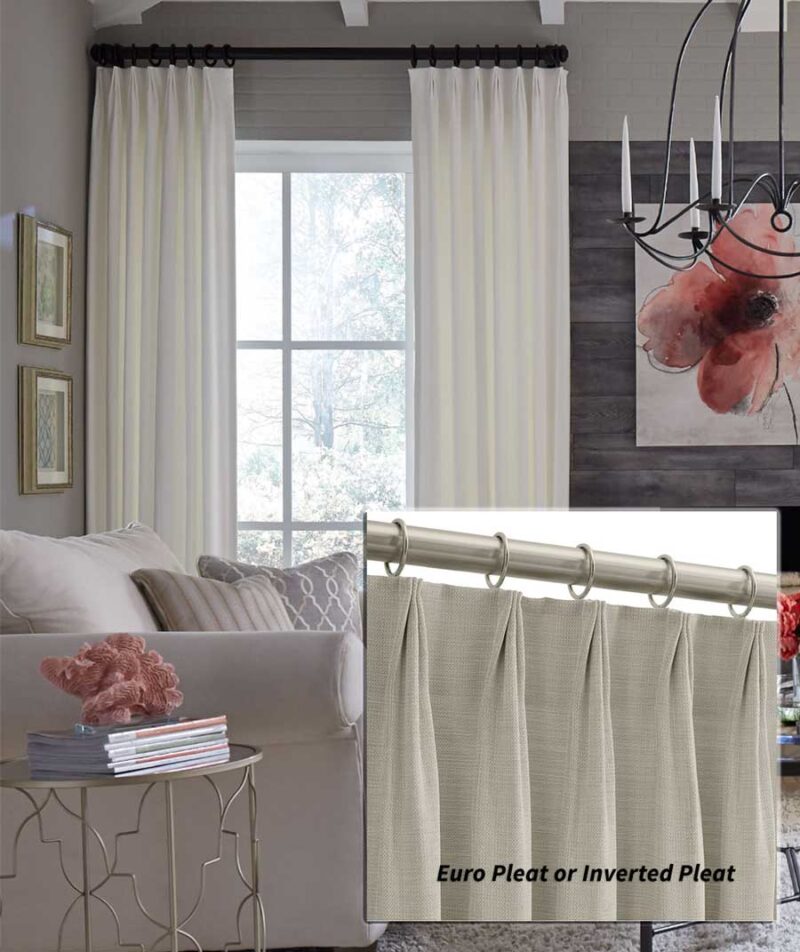
This can also be referred to as an inverted pleat, since you see similar gathers as with other pinch pleat drapes, but they almost seem “upside down.”
Are Pinch Pleat Draperies Considered Modern or Traditional?
The quick answer? Pinch pleat drapery is versatile, capable of fitting into a variety of home styles. We believe that as long as the decisions you make are intentional, you can’t miss. When it comes to choosing header styles, they do offer a finished look at the top of the curtains, but they certainly are not the only defining factor. As we sit down with homeowners, we like to know which general “direction” we are heading with style statements, and we can start designing from there. We’ll work with you to help you decide whether you’d like to feature just the drapery, or if layering drapery with shades is more your preference. We can show formal looks—highly tailored with luxurious fabrics and ornamental drapery hardware.
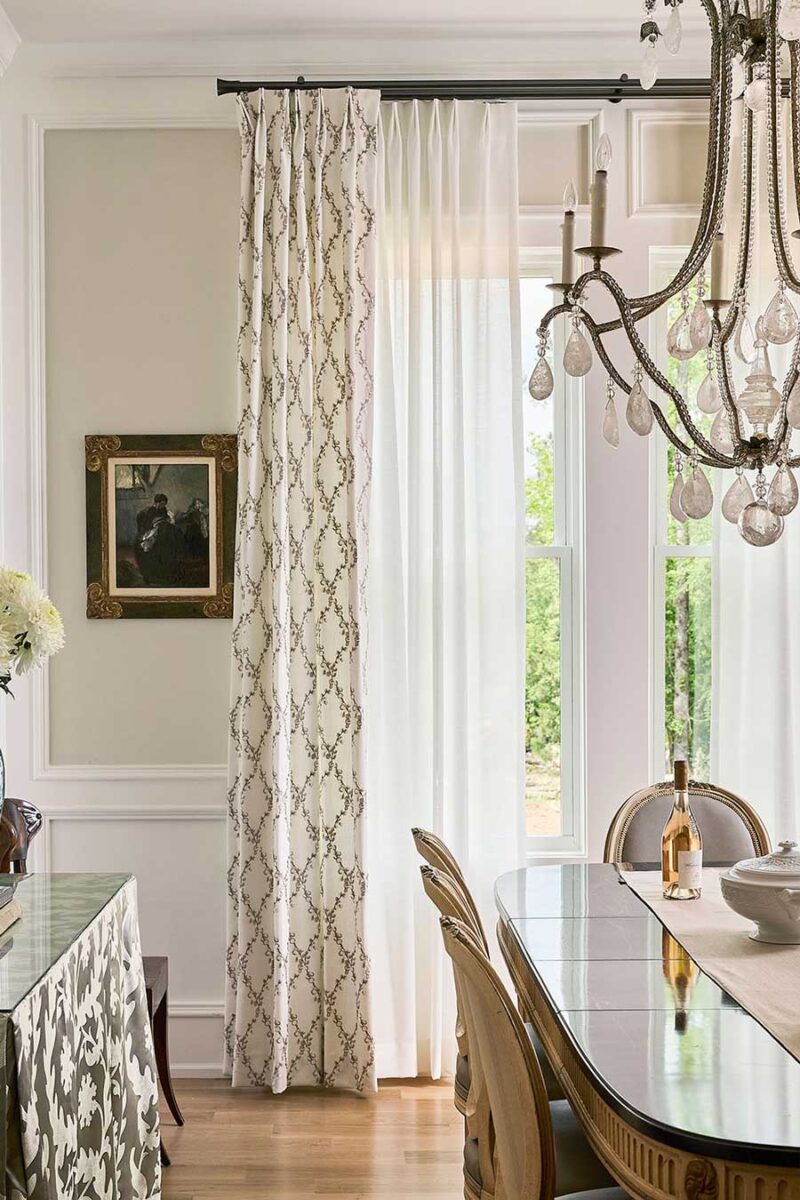
We can also showcase a casually beautiful scene, with airy, lightweight fabrics that add flowing softness, but with simple hardware and a color palette that stays close to neutral. The hardware styles and finishes influence the finished look, and the fabrics—colors, patterns, and type of textile—have a dynamic impact on the resulting statement.
Pinch Pleat VS Other Drapery Header Styles
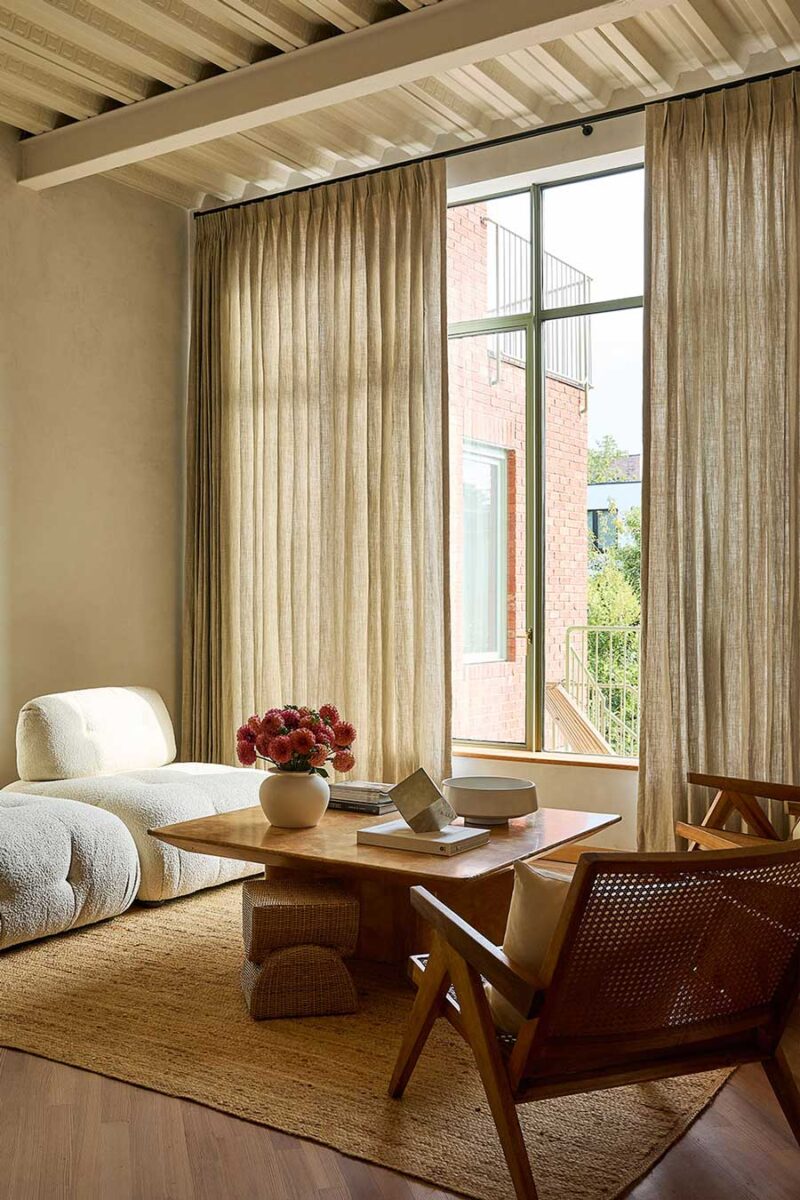
There are quite a few ways to finish the top of your drapery and attach it to your drapery rod. We have chosen to highlight the details of pinch pleat drapery, but we also want to show off the other two most popular header styles: Grommet and Ripple fold. We’ve described pinch pleat drapery as elegant and tailored—but what about these other two?
Grommet Style Draperies
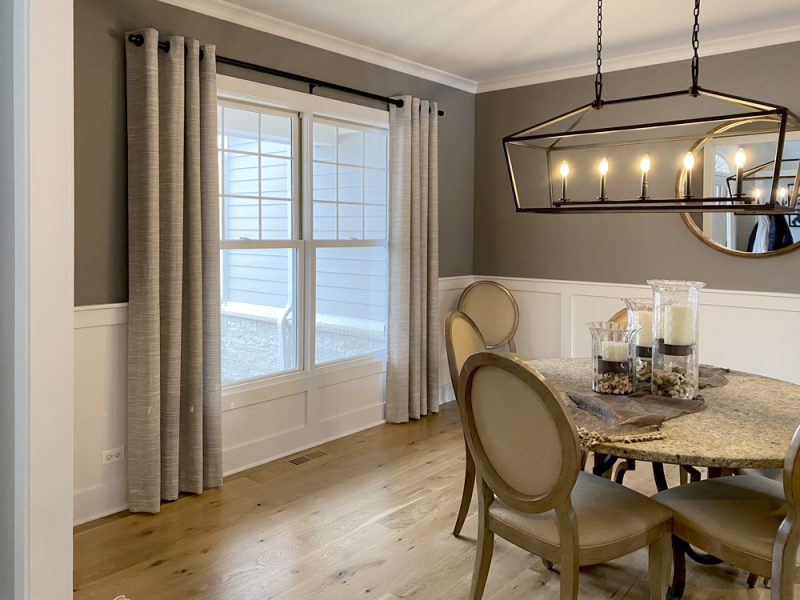
Grommets refer to the metal rings that are stamped into the top of the header fabric of the drapery, allowing the curtain to move across the drapery rod freely, without friction. The grommet header style offers a more traditional vibe, but that can be influenced by the fabrics and drapery hardware, just like with pinch pleat drapes. Grommets tend to offer a “free flowing” style of curtain, without the trained structure you have with pinch pleats. They can require attention when opening and closing if a consistent look is what you desire. When considering grommets, you’ll want to coordinate the metal of the grommets with the material of the drapery hardware, as well as other design elements in the space.
Ripple Fold Draperies
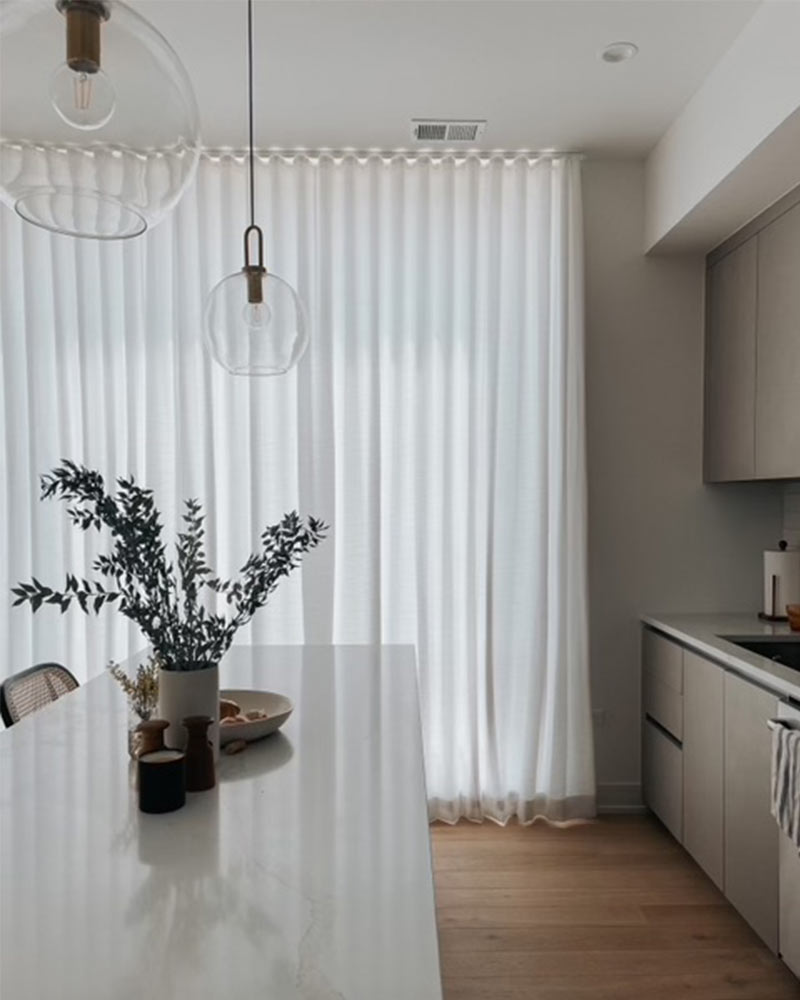
Ripple fold draperies move along a specialty track, designed to allow smooth movement for opening and closing the drapes. There is the option to see the rod of the track, but you can also opt to blend in with the wall or ceiling color. There is no other hardware showing, which gives the impression that the draperies are simply floating along the rod as they move. Ripple fold drapery features soft, curved loops of fabrics at the top, staying consistent across the top as the draperies are adjusted. The consistent curves and smooth design create a minimalistic style statement which can crossover many design preferences.
The Best Rooms for Pinch Pleat Drapes
Pinch pleat drapery will offer an upscale look in any room—the choice is yours. But, let’s explore the most popular rooms in the home for these custom draperies:
- Living Rooms
- Dining Rooms
- Primary Bedrooms
Homeowners love pinch pleat draperies in living rooms and dining rooms as a way to elevate the design. The tailored pleats enhance the height of the ceiling as the details draw the eye upward. We’ve also seen clients wanting to create a design moment in the primary bedroom—creating a sanctuary for themselves as they curate a space that is all their own.
Can Pinch Pleat Drapes Be Motorized?
Yes! The Hunter Douglas PowerView® automation system is available for drapery motorization, and that includes motorized pinch pleat drapery. Use a remote, the app on your phone, or voice commands with your smart home device to open, close and adjust your smart drapes effortlessly.
Have You Fallen for Pinch Pleats?
We couldn’t love them more! The custom finish, the structured appeal—pinch pleat drapery is just one more way you can set your home apart. At Skyline Window Coverings, we invite you to visit one of our showrooms to see these beautiful details in person, browse the fabrics and sit down to chat with us about the vision you have for your home. Then, invite us over to your home for a design consult. We’ll offer advice about window solutions, talk with you about coordinating design and take professional measurements while you find fabrics that look their best in your home. Get in touch with our design team today!