
When it comes to the perfect outfit, it’s all about the layers. The same can be said of your windows. Pairing shades with drapery is an ideal way to bring beautiful style and (much-needed) function to your space. While there may be countless looks and combinations you could choose, today our designers are bringing you layering ideas—pairing custom drapery with other window coverings—to spark inspiration for your own home design project.
How to Layer Shades with Drapery: Where to Start
It’s All About the Base
The first layer to choose is the base window covering. This decision sets the foundation for the entire look, as it determines the primary function of the window—whether that’s light control, privacy, glare reduction, or a combination of all three. Our window covering specialists help guide this process by looking at how the room is used and the atmosphere you want to create. Once the functional needs are clear, it becomes much easier to select the shade style that will work best as the starting layer.
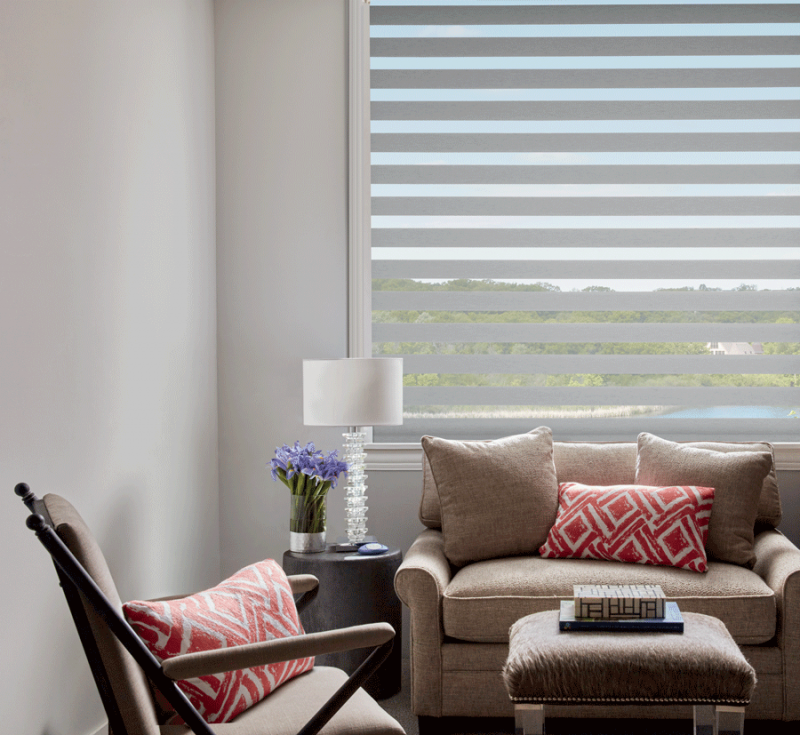
From there, drapery is added to bring softness, dimension, and style. Some spaces benefit from stationary side panels that frame the window, while others call for full drapery coverage to enhance privacy, light control, or visual impact.
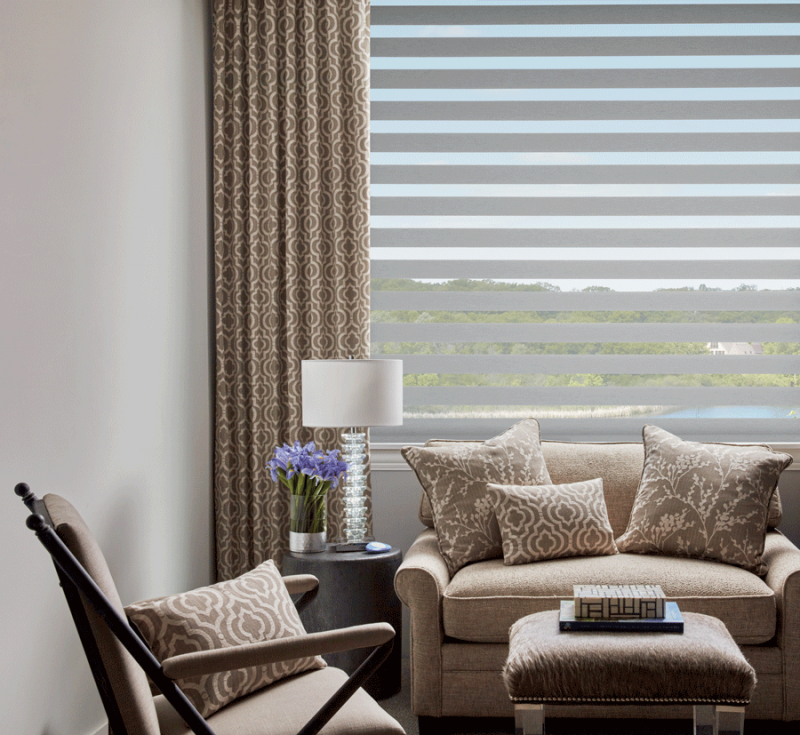
Choose Your Fabric Combinations
When thinking about how to layer window treatments, fabrics are often top of mind—and for good reason. Fabric choices add softness, texture, and color, and they play a major role in defining the overall look and feel of a space. This is where your personal style really comes into play.
As you explore fabric options, consider the following:
- Are you drawn to patterns, or do you prefer the look of solids?
- Would you like your space to feel more casual or more formal?
- Do you gravitate toward bold colors, soft neutrals, or something in between?
- Will the fabric serve a functional purpose, or is it primarily for style?
Patterns + Textures
Two design elements that instantly bring personality to a space—patterns and textures—should always be considered when pairing shades with drapery. Patterned fabrics can create a highly customized look, pulling in colors and motifs you love. The key is balance: when too many patterns or colors compete, the space can begin to feel visually chaotic.
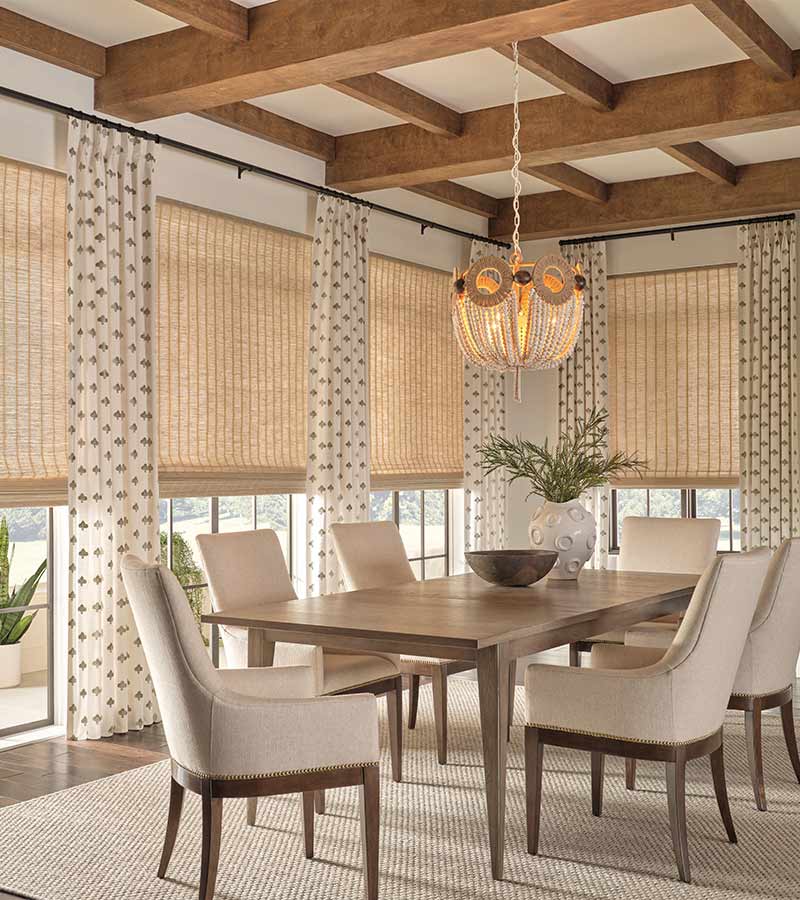
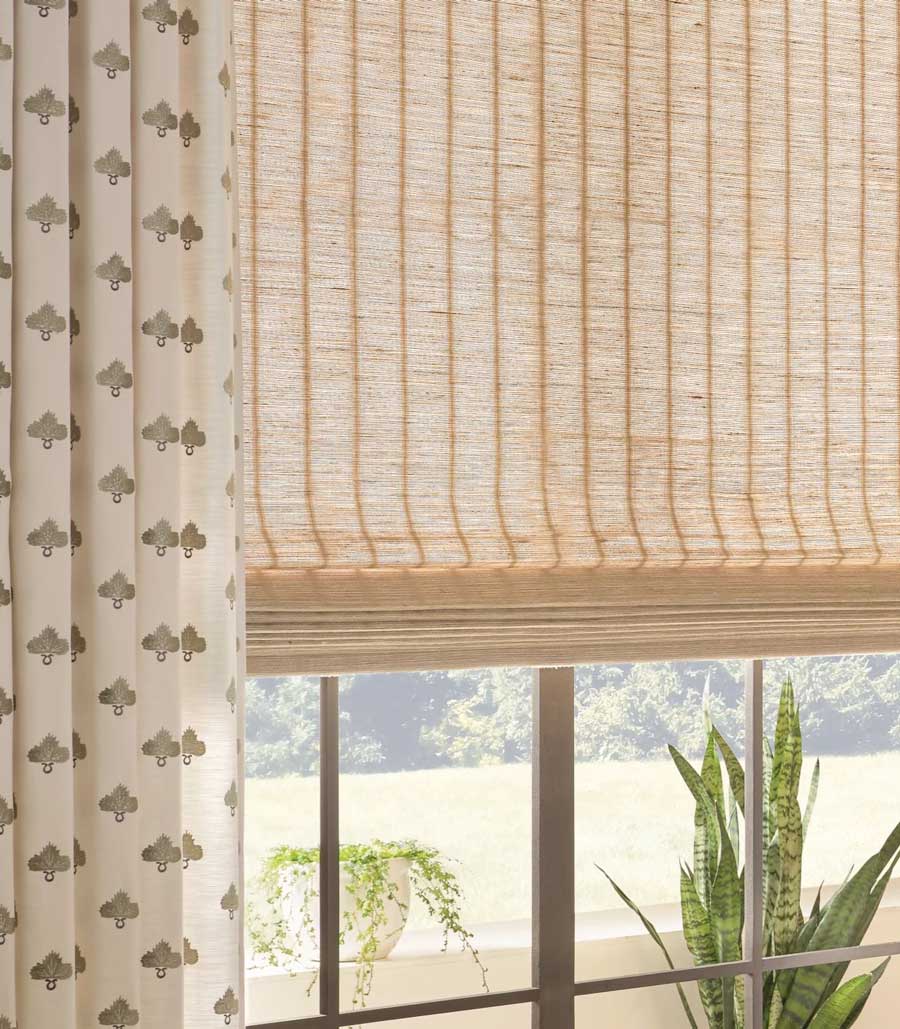
By selecting drapery with a simple stamped pattern, this homeowner was able to pair it with a woven shade featuring subtle vertical lines. The woven fibers softly filter light, illuminating the shade, while the drapery frames the window—creating a look that feels polished with a touch of whimsical charm.
A Subtle Nod to Neutral
Window treatments can also play a powerful role in making a space feel larger and more open. Lighter colors naturally reflect light, helping rooms feel brighter and more expansive. Drapery panels that hang vertically can draw the eye upward, making ceilings appear taller.
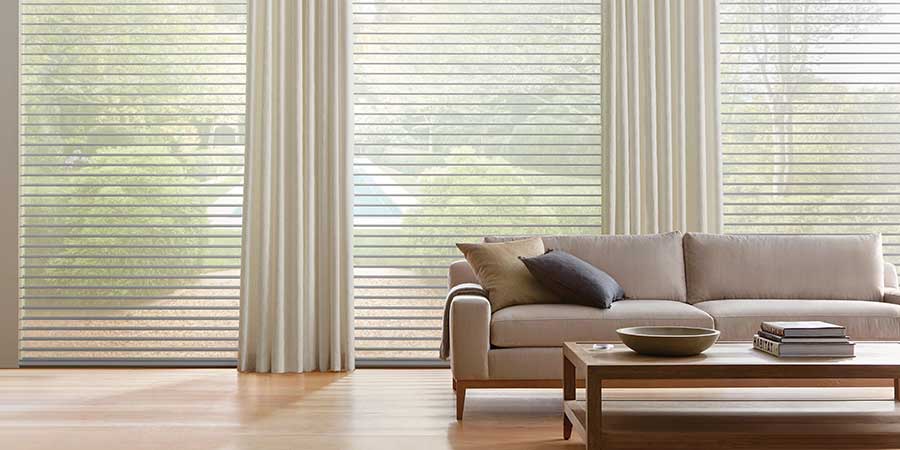
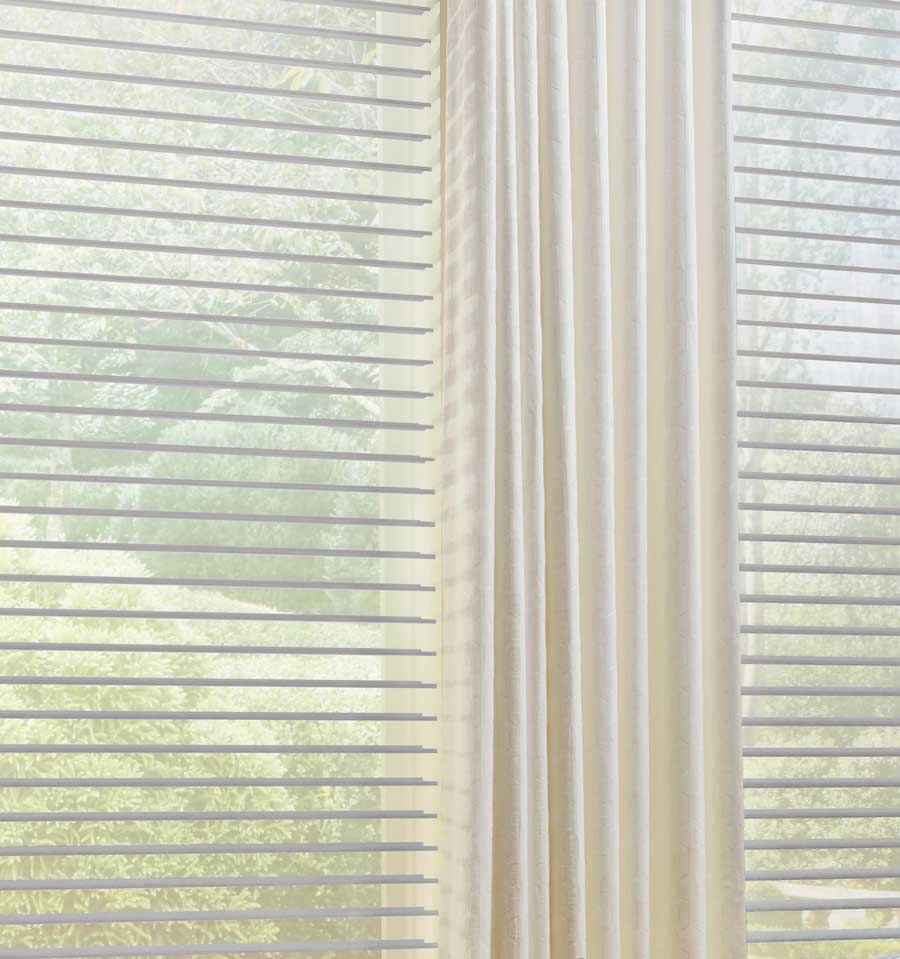
Sheer shades are another excellent option for enhancing openness. They reduce glare and help protect against UV damage while preserving the outdoor view. In this layered look, the sheer shade provides light control and privacy, while the drapery frames the window—adding softness, depth, and dimension.
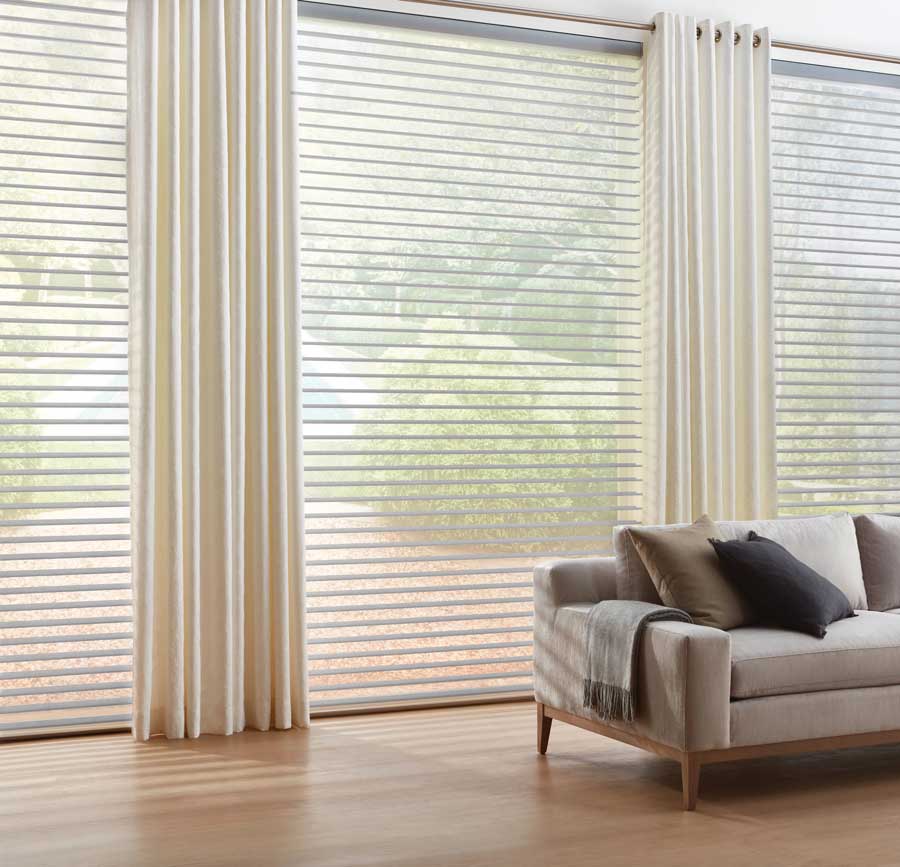
Layering two neutral window treatments creates an elegant, understated result. To introduce just a hint of personality, consider neutral fabrics with texture or subtle patterning that becomes visible up close. Jacquard fabrics, for example, offer dense construction with refined texture, lending a sense of luxury. Silk and velvet elevate the look even further, while cotton and linen bring a more relaxed, casual feel.
Contrasted Styling with Low Profile Shades
When pairing shades with drapery, you can go the opposite route and contrast the fabrics. It’s a popular look that makes your draperies stand out in color or pattern. If you’re wanting your drapes to make a statement like this, consider the thickness of the fabrics. You’ll want a wide width of fabric that can look intentionally full when stacked at the edge of the window. But, there’s something else to consider…
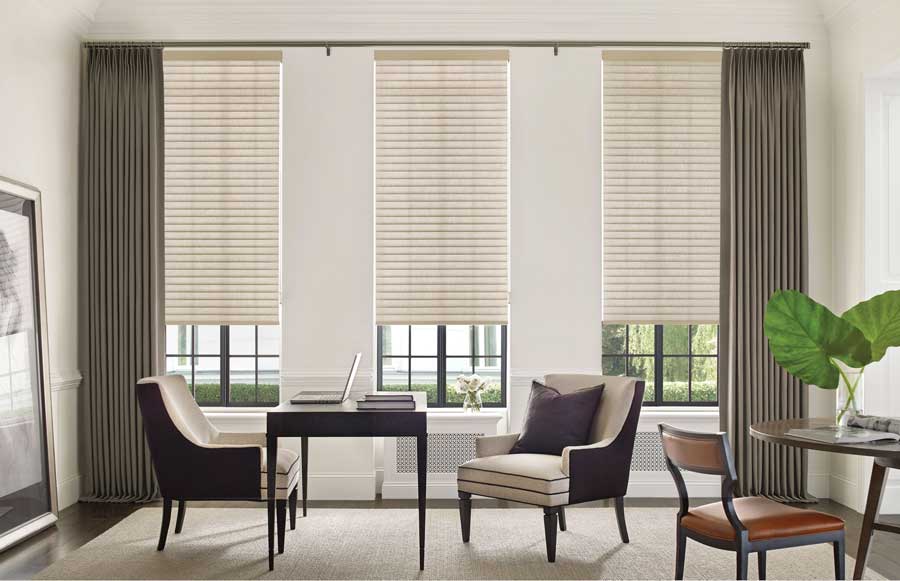
It’s about the finished look of pairing shades with drapery. The windows in this home office have been finished with a kerfed–or trimless–look. This is a contemporary style of finishing windows. They have enough depth for the window shade to be mounted inside the window area. If your windows are cased, with traditional trim surrounding the window, it’s possible to do an inside mount of the shade. However, with shallow windows, which occurs more when dealing with older windows, the shades may have to be outside mounted. That can make pairing shades with drapery a little more challenging, but not out of the question.
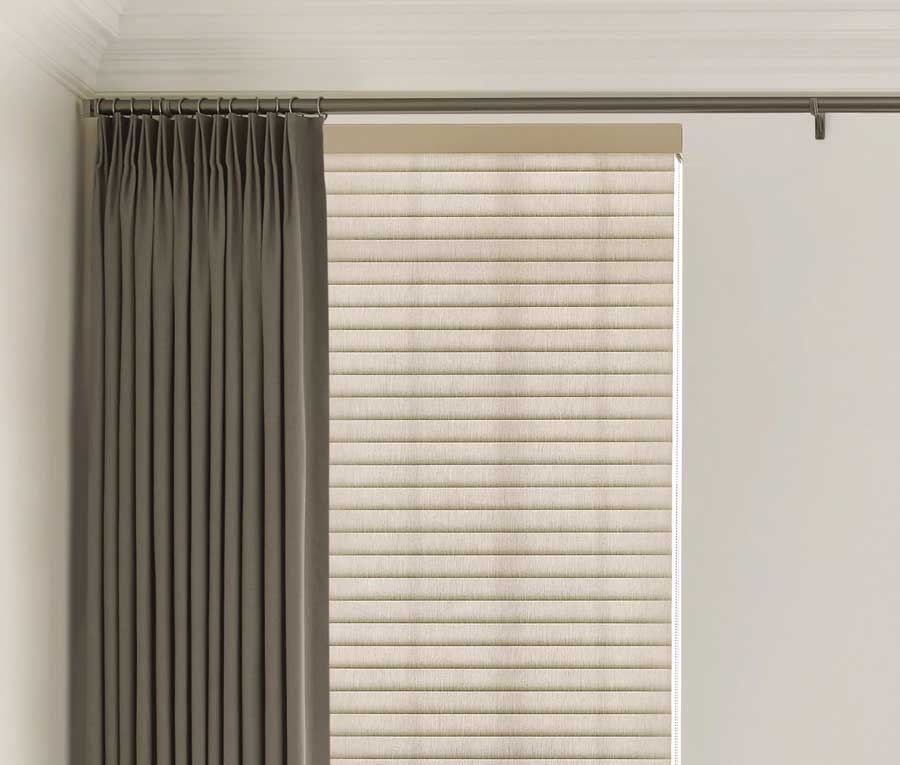
The key is to choose a low profile shade, with a roller function, or low profile stacking, so you don’t run into a problem with the final look or function of your window treatment layers. Your window covering designer will be able to help you decide what’s possible–they know all the tricks of the trade!
Design Elements That Bring It All Together
Once your shades and drapery are selected, it’s time to focus on the finishing details that complete the look. Header styles and hardware play an important role in how layered window treatments function and how polished they feel in the space. The header style refers to how the drapery is finished at the top and how it connects to the hardware. There are three common header styles to consider, each offering a different visual effect:
- Rod Pocket: A traditional option that tends to feel more relaxed and casual, as the fabric slides directly over the rod.
- Grommets: Metal rings are set into the top of the drapery, creating clean, even folds. This style often feels more tailored and can lean formal, especially when paired with coordinating hardware finishes.
- Pinch Pleat: Fabric is gathered into structured pleats and attached to the rod with drapery rings. Versions of this tailored drapery style will deliver a polished look that works beautifully in layered designs.
Hardware choices are just as important. You’ll want to decide whether the drapery hardware should act as a design statement or blend seamlessly into the space. Finishes, profiles, and placement all contribute to the final look, helping tie your layered window treatments together in a cohesive way.
Ready to Start Layering?
From casual to formal and everywhere in between, Skyline Window Coverings wants to help you bring your home to life. Get in touch with our Skyline Window Coverings team to set up your free in-home design consult, where we can guide you to the right layering combinations for the style and function of your windows.